Country-by-Country Breakdown: Navigating Different European Toll Systems

James Thompson
16 March 2026
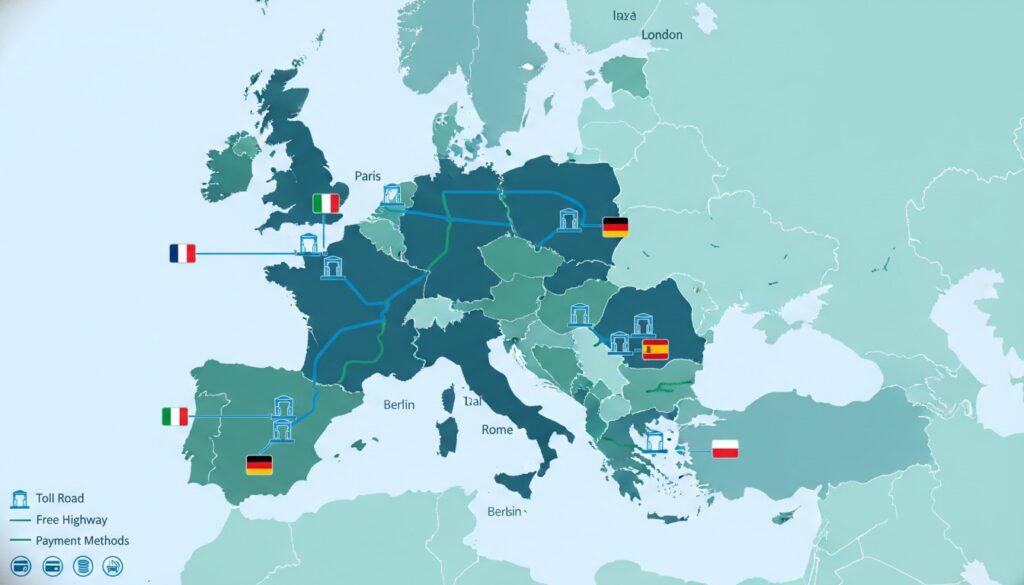
Country-by-Country Breakdown: Navigating Different European Toll Systems
Introduction
Navigating Europe’s diverse toll road systems can feel like solving a complex puzzle. With 15 different countries implementing unique approaches to road pricing, from traditional toll booths to sophisticated electronic systems, understanding these variations is crucial for any traveler or transport professional crossing European borders.
Whether you’re planning a cross-continental road trip, managing a fleet of commercial vehicles, or simply trying to budget for your next European adventure, this comprehensive guide will equip you with the knowledge needed to navigate each country’s specific requirements efficiently and cost-effectively.
Western Europe: Traditional and Modern Systems Combined
France: The Pay-Per-Use Pioneer
France operates one of Europe’s most extensive pay-per-use toll systems, covering over 8,000 kilometers of motorways. The system is straightforward: you pay based on the distance traveled on toll roads.
Key Features:
- Traditional toll booths with cash, card, and electronic payment options
- Télépéage electronic tags for faster passage
- Variable pricing based on vehicle class and time of day
- Average cost: €0.07-0.12 per kilometer
- Keep your toll ticket safe – you’ll need it at exit
- Consider purchasing a Télépéage tag for frequent travel
- Budget approximately €50-80 for a Paris-Nice journey
- Electronic toll collection via on-board units or manual terminals
- Covers approximately 15,000 kilometers of roads
- Pricing based on distance, number of axles, and emission class
- No tolls for passenger vehicles
- Toll roads marked with “AP” designation
- Electronic VIA-T system for seamless passage
- Manual toll booths still widely available
- Costs vary significantly by region and route
- Use free autovías (A-roads) for budget travel
- Purchase VIA-T for 20% discounts on many routes
- Plan routes using toll calculators available online
- 10-day vignette: €9.60
- 2-month vignette: €27.80
- Annual vignette: €93.80
- Digital vignettes available since 2018
- Must be purchased before entering toll roads
- Available at gas stations, border crossings, and online
- Heavy fines for non-compliance (€120-300)
- Some mountain passes require additional tolls
- Annual vignette only: CHF 40 (approximately €37)
- Valid from December 1st to January 31st of the following year
- No short-term options available
- Covers all national motorways and semi-motorways
- Purchase before entering Switzerland to avoid fines
- Vignette must be properly affixed to windscreen
- Some Alpine tunnels charge separate fees
- Digital vignettes introduced in 2023
- 10-day e-vignette: €12
- 30-day e-vignette: €21
- Annual e-vignette: €56
- Purchase online or at retail locations
- No physical sticker required
- Automatic number plate recognition
- Instant activation possible
- Toll roads with manual and electronic collection
- Vignette system for trucks on national roads
- Free motorways in many regions
- e-TOLL system for commercial vehicles
- County vignettes for specific regions
- National vignettes for countrywide travel
- 10-day, monthly, and annual options
- Prices range from €3-150 depending on coverage and duration
- Use the official online portal for purchases
- Plan routes carefully to avoid unnecessary county charges
- Download the official app for easy management
- AutoPASS electronic system
- City-specific congestion charges
- Time-based pricing variations
- Automatic number plate recognition
- Multiple private operators with different pricing
- Telepass electronic system widely accepted
- Some routes significantly more expensive than others
- Urban congestion zones in major cities
- Via Verde electronic system
- Temporary registration options for tourists
- Some highways completely electronic
- Pre-payment required for certain routes
- Research toll requirements for each country on your route
- Calculate total toll costs using official calculators
- Purchase necessary vignettes before travel
- Download relevant mobile apps for real-time information
- Carry multiple payment methods for flexibility
- Compare toll vs. free route travel times and costs
- Consider overnight stops to take advantage of off-peak pricing
- Investigate multi-country vignette packages
- Use electronic systems for available discounts
- Plan fuel stops at locations offering vignette sales
- GPS systems with toll road preferences
- Country-specific toll calculation apps
- Electronic payment system registrations
- Real-time traffic and toll information services
- Automatic number plate recognition cameras
- Mobile enforcement units
- Border control checks
- Rental car company follow-up charges
- Austria: €120-300 for vignette violations
- Switzerland: CHF 200 plus vignette cost
- France: €90-375 for toll evasion
- Germany: €25-75 for environmental zone violations
- Purchase toll products from official sources only
- Verify activation of digital vignettes before travel
- Keep receipts and documentation readily available
- Understand specific requirements for your vehicle category
- Register rental vehicles properly for electronic systems
- Cross-border electronic payment integration
- Satellite-based distance charging pilots
- Environmental impact pricing models
- Unified European toll payment systems
- Real-time dynamic pricing implementation
- Subscribe to official toll system newsletters
- Follow transport ministry announcements
- Update navigation systems regularly
- Monitor changes in environmental regulations
- Consider future-proof electronic payment options
Practical Tips:
Germany: Truck-Only Tolls with LKW-Maut
Germany takes a unique approach by charging tolls only for trucks over 7.5 tons on federal highways and some federal roads. Private cars enjoy toll-free travel on the famous Autobahn network.
System Details:
Important Note: While cars travel toll-free, some cities implement environmental zones requiring special stickers.
Spain: Autopistas and Electronic Evolution
Spain combines toll-free autovías with toll-charging autopistas, creating a dual system that offers travelers choices between free and premium routes.
System Breakdown:
Money-Saving Strategy:
Central Europe: Vignette Systems Dominate
Austria: The Vignette Trendsetter
Austria pioneered the vignette system in Europe, requiring all vehicles to display a valid toll sticker when using motorways and expressways.
Vignette Options:
Critical Requirements:
Switzerland: Premium Pricing for Premium Roads
Switzerland operates a mandatory vignette system for all motorways, with one of Europe’s highest annual fees reflecting the country’s exceptional road infrastructure.
System Specifications:
Essential Information:
Czech Republic: Flexible Electronic System
The Czech Republic has fully transitioned to a digital vignette system, offering multiple duration options for different travel needs.
Available Durations:
User-Friendly Features:
Eastern Europe: Developing Modern Infrastructure
Poland: Hybrid Approach
Poland implements a mixed system combining traditional toll roads with vignette requirements, depending on the road type and vehicle category.
System Components:
Hungary: Comprehensive Digital Coverage
Hungary operates an all-electronic toll system covering motorways, expressways, and some main roads, with no physical toll booths.
E-Vignette Structure:
Navigation Tips:
Nordic Countries: Limited Toll Implementation
Norway: Urban Tolls and Ferry Fees
Norway focuses on urban toll rings around major cities rather than highway tolls, plus extensive ferry systems connecting remote areas.
Toll Characteristics:
Sweden: Congestion Charges Only
Sweden implements congestion charges in Stockholm and Gothenburg but maintains toll-free highways throughout the country.
Southern Europe: Mediterranean Approaches
Italy: Complex Regional Variations
Italy’s toll system varies significantly between regions and operators, creating one of Europe’s most complex networks to navigate.
System Complexity:
Portugal: Electronic-Only Zones
Portugal combines traditional toll roads with electronic-only sections that require pre-registration for foreign vehicles.
Key Considerations:
Practical Navigation Strategies
Planning Your Route
Essential Preparation Steps:
Cost Optimization Techniques
Money-Saving Approaches:
Technology Integration
Digital Tools for Success:
Pro Tip: Many electronic toll systems offer mobile apps that provide real-time account management, route planning, and payment history – essential tools for frequent travelers.
Compliance and Enforcement
Understanding Penalties
European countries take toll compliance seriously, with enforcement systems becoming increasingly sophisticated:
Common Enforcement Methods:
Typical Penalty Ranges:
Best Practices for Compliance
Ensuring Legal Travel:
Future Developments in European Tolling
Emerging Trends
European toll systems continue evolving toward greater integration and digitization:
Key Developments:
Preparing for Changes
Staying Current:
Conclusion
Navigating Europe’s diverse toll systems requires careful planning and understanding of each country’s unique approach. From France’s extensive pay-per-use network to Germany’s truck-only system, and from Austria’s pioneering vignettes to Norway’s urban congestion charges, each system reflects different infrastructure philosophies and funding models.
Success lies in thorough preparation: researching requirements, purchasing necessary permits in advance, and leveraging technology to optimize routes and costs. As European toll systems continue evolving toward greater digitization and integration, staying informed about changes and new developments will become increasingly important.
The investment in understanding these systems pays dividends in smoother travel experiences, avoided penalties, and optimized costs. Whether you’re a occasional tourist or frequent commercial operator, mastering European toll navigation opens the door to efficient, compliant, and cost-effective continental travel.
Ready to Master European Toll Systems?
Take action today to ensure your next European journey is smooth and compliant. Start by identifying the countries on your planned route, then systematically research and prepare for each system’s requirements. Consider downloading official apps, pre-purchasing necessary vignettes, and exploring electronic payment options that could save both time and money.
Share your European toll experiences in the comments below, and don’t forget to bookmark this guide for your next continental adventure. Safe travels!